Sunday, February 6, 2022

Sew here we are again

Here we are, in the Year of Our Pandemic 2022, and things are a bit of a mess. Still, we're learning and sewing more all the time. 

So let's take a look at what projects are currently on the work bench. First there's the Subtle Dress. This is a very thin cotton in what I mentally have dubbed SCA Period-oid style, Ye Olde Faire Clothes if you will. The silhouette is sort of generally 15th century Florentine and I suspect that's what I'll accessorize it towards.
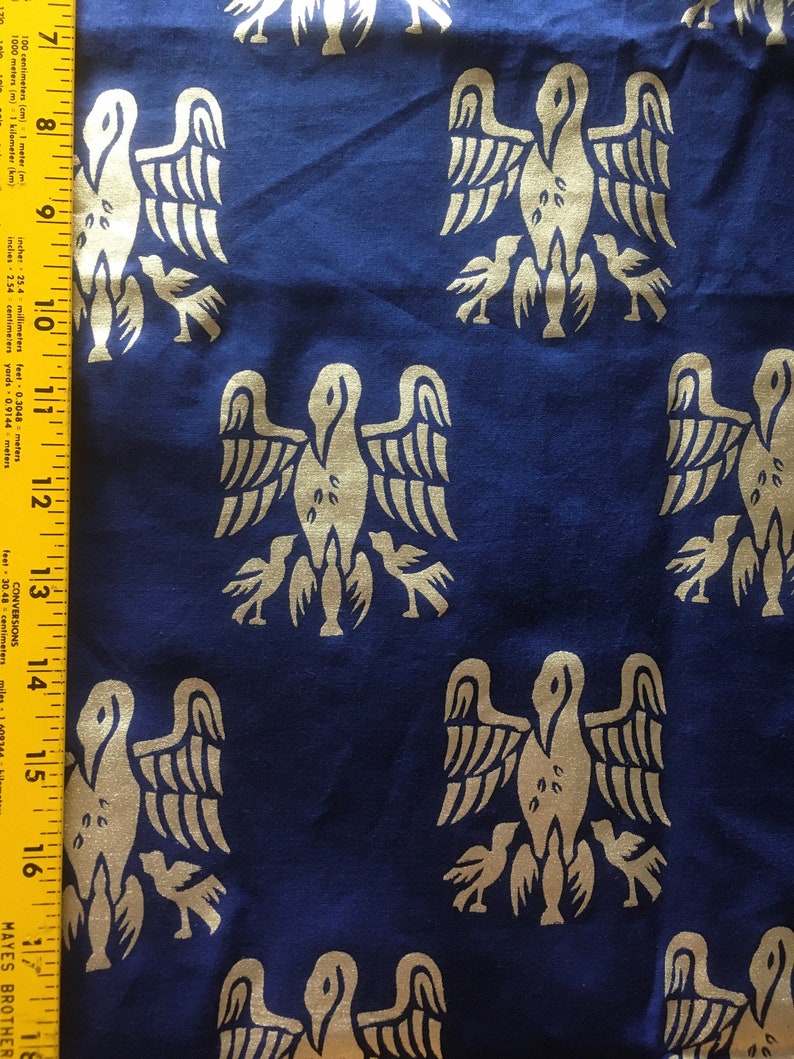
Clearly, the reason it's subtle is the delicate print. You'd hardly even notice the HUGE WHOPPING BIRD on it. I got the fabric from Cok Guzel over on etsy and it's totally worth it. 

 The gown itself is based loosely on Jen Thompson's 1480's Florentine Gown, but not closely enough you'd see the resemblance I think. Her write-up is great though.I really want to do more of these just for the experience, but the dress diaries do lure me down so many rabbit holes.

The next thing that's been taking up space in my brain is a piece I'd like to enter into a competition, assuming it ever gets finished. I'm making a 10th Century Norse linen underdress for a woman. It is saffron-colored ( modern dyes are MUCH cheaper thanks), and hand-sewn on all the seams. I'm using a very tiny running back stitch where I take about three stitches onto my needle at once, pull through, and then do a small back stitch to anchor it. Then, once the seams are done, I'll go back over them and finish them using a whipstitch on folded over seam allowances.

 I could opt to flatten the seams and use a thread of wool to whipstitch in a filler thread, but my test piece itched me pretty badly. I think that technique will need to wait for an over garment. Many of the techniques I'm trying are documented in Woven Into the Earth by Else Ostergaard and in Medieval Garments Reconstucted by Anna Norgard and Lilli Fransen, as mentioned by Morgan Donner in the Sexy Potato video. Both of these books are on my personal wish list and I've been reduced to borrowing them to read furiously before returning them to their owners. I've also used the website Needlework in the Viking Age for some good reminders.

 One of the items of frustration and then moments of inspiration that occurred during this build was based entirely on bad math. My brain had read (somewhere) that period looms tend to max out on weaving width about 22 inches (55cm) wide. So I cut my rectangles on that assumption and started stitching away. After I'd done one arm and a very nice neck hole all the way, I saw a video by the accomplished Opus Elenae that reminded me not to finish the seams totally until the garment is done. This helps keep the stress on the seams balanced, so they don't wind up pulling in odd directions. It's a good thing I didn't finish them all the way. Pulling the partially sewn garment on to make sure I had the side gores in the right spot showed me that there was no possible way this thing would fit me. There was a fair amount of swearing and some hasty re-mathing.

 After a sulk I had some time to think. IF a loom was 22 in wide, then there was no way I could cut a width wider then that and neither could anyone in period. I realized I've NEVER seen documentation on that loom width in a book, but if it occurred then piecing was the only reasonable option. So, the sleeves came off this morning and I'm going to add extra thin rectangles of material down the sides to extend it. The sleeves themselves fit just fine, but the tightness of the chest and back made the gown much too short. I'm hopeful that little quirk will be worked out when I get the extra piecing added.It occurs to me that will lengthen the arms a bit, so there will be nice deep cuffs to add weight. Perhaps they need some embroidery?


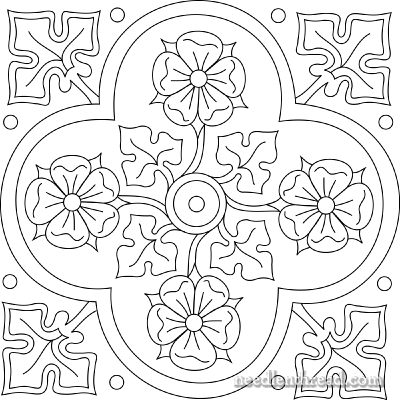
 The other thing that I've been working away on trying to work my way up to goldwork embroidery. I've done some goldwork and silverwork in the past ( the difference is the materials, not the techniques)and I know I want to practice before I spend so much money. One of my worst problems is I've never properly dressed a frame or hoop and my fabric tends to be horribly droopy and sloppy. I've also not had a lot of practice with laying tools ( I don't own any). Here's a guide to laying tools that I drool over sometimes. I don't want to buy a bunch of silks to work with and then find out I can't use them, so I'm started working my way through some tutorials. I downloaded a Tudor Rose Roundel pattern from NeedlenThread.com and I'm slowly filling it in with chain, stem, and satin stitch. It's been in progress for over 2 years now, but so has the rest of the world.
I hope the world is bright on your end and you always know where your seam ripper is currently.

Tuesday, August 28, 2018

San Japan 2018

I am utterly distracted. I forgot that I needed to do some work for the San Japan demo at the end of this week. I pulled my usual demo dress out and it has rust stains all over the white satin skirt. ARGH!!!
So, different dress, move on. Other dress will need a ruff made and I need to repair my horribly abused hoop skirt. If I CAN make a new one before the weekend, great. The odds aren't good though. I'll also need a mask for Friday night's masked ball.
The mask I made is a quicky version of Belphoeb's vizard. Instead of a backram base I just hot glued cotton velveteen to a plastic commercially available craft mask. I don't have the drying time right now to do it the way she did, but I'll give it a try later when I'm not on a time crunch.
I'm using Noel Gieleghem's document on how to produce a 1570's stand alone ruff for my directions on How-To. As I have already failed everyone by using the cotton muslin I have in my stash to make the thing, I doubt I'll show him any pictures. My supply of cotton lace has vanished on me and I'm just tossing bobbins and thread around like crazy.
Pictures will occur later if there's anything worth looking at.

Thursday, August 23, 2018

Canaples progress- Kirtle Questions

It's been a busy week but I've got a bit of progress to report on the Madame Canaples dress.
First of all: Embroidery!

I did a line of overlapping scallops, inverted and drawn out so that the longer legs made a little diamond when they touched. To get the perfect half circle, I traced around a shotglass that has a picture on it. From one side of the picture to the other was exactly the right shape for the space. I used 3 strands of DMC black cotton embroidery floss and I worked it in backstitch without a hoop because it was faster. I really like how the pattern came out, it was easy to visualize and break down into working steps. I haven't added the leafy bits yet because I'm still debating how much of them I want to do.
In the picture it looks like three small projections from the top and bottom of each half circle. Is that center bit a triangle shape? Are those vines? The extra bits don't look like blackwork to me exactly, but I don't know if satin stitch was mixed with blackwork in 1525. I would err on the side of 'no', so it's going to be more time with a magnifying lens to figure those bits out. Also, I'm about to start couching the gold cord I have around the top edge of the smock today. I have a plastic gold filament thread to tack it down and I'll probably use a very tiny whip stitch to get it in place.

Secondly: Pattern drafting!
I have a friend, Simona della Luna, who has attended several of Matthew Gagny's bara workshops and she has walked me through the process a few times. I'm still not 100% sure I took down the information correctly because I feel like I get a different shape off the body block every time I do this. However! I do recommend it for getting a basic flat pattern that you can fiddle with very easily. I ALWAYS remeasure if it's been more than 3 months since I last built something. Don't know about you, but my body can move a lot of weight around in 3 months and with something close-fitting like a bodice, it's going to matter. That's why I put the date on all my pattern pieces every time as well as "front', 'back', 'left arm' or whatever. You THINK you'll remember, but I never do.
So, I grabbed an old mostly cotton sheet and cut out the first of a few drafts. It used to be that I would cut my pattern out of the lining right from the start, but I want to make SURE this one fits better before I take up the scissors against my linen. These are my striped baby steps from the front and from the back.

Thoughts so far:
For a draft that supposedly had no seam allowance, that's really big. It does fit over the smock, so yay. But...really big.
I need to make some temporary tack-in lacing strips so I can test how it will look when it's held on with lacing instead of pins. That's not a huge deal yet ( 1st draft!) but they'l come in handy shortly.
Dang, those are some slender sexy straps on that gorgeously wide neckline! I hope that high back will keep everything on the shoulders properly.

Last time I posted I had some questions about the kirtle opening. I asked my questions (poorly) in a wonderful Facebook group, The Elizabethan Costumers, and got some GREAT feedback. Those gentlebeings really know their stuff. What it boiled down to is there might be 3 layers ( smock, kirtle, gown) or there might be four layers ( smock, stomacher, kirtle, gown). There's a bunch of different ways to describe what we're looking at but until we find a picture of Madame with her top layer off we not going to know for sure. Because I'm trying several new-to-me techniques for this particular outfit, I'm going to go against the portrait slightly.
I'm going to make this kirtle with a fairly low neckline, bringing it down below the neck of the gown, but keep the lacing at the sideback( suggested by Kimiko Small, all praise her brain!). That will allow me to padstitch the front of the kirtle heavily because the support I'm going to need is no small thing. My upper deck requires extra mooring so I'm also going to make sure to lightly pad and bone the front of the gown as well. Simona is trying to talk me into using bonding straw/ canes for that top layer and the more I think about it the more I like the idea. *plot, plot, plot*
One of the biggest things I have to keep reminding myself about is that there is NO TIME LIMIT on this dress. It's not a sprint, no one is waiting on it. I can take my time and work out all the details so I'll be actually happy with it when I'm done. Settle down ADD brain, we've got plenty of tiny details to obsess over!

Which is why I'm in the middle of making a hat too. It just had to happen, no I don't think I can wear it with this dress because it's super Castilian. I'm doing it anyway because it makes me happy. I borrowed the idea from Stanzi in Lochac. She did one after staring at this picture for awhile and I agree with her.
I've been looking for hats with better sunblocking power since I got my first round of skin cancer. I think might do nicely.
ScatterBrain, AWAY!

Tuesday, August 14, 2018

Madame de Canaples- 1525

Things happened, Life occurred. We appear to have stabilized, although the current house has much less crafting space. Let's take on a big big project and find out how that's going to affect things.

This is Marie d'Assigny, Madame de Canaples painted by Jean Clouet in (roughly) 1525.

Every now and then one of those "Who were you in history?" quizzes crosses my media and I always get this picture. Admittedly, we share a similar number of chins and something around the cheekbones. I've been trying to stay in the 1490-1500 range for awhile, but that dress really does look sharp. So I lost my mind and started working out how to build it.
What I see in the portrait is three layers.

Layer One: I see a square necked smock/ camicia/ shirt thing with a blackwork band and a gold edging. I made a smock using the pattern for a 16th century Venetian camicia found here: Realm of Venus
It was fast! It required very little math! It was... gathered into a neckband that couldn't disguise it's lumpy, bumpy weirdness. This was NOT the fault of the pattern. I figured out I skipped a step in the gathering stage and didn't tack it down and sew it flat BEFORE I put the neckband on. Still not sure how I missed that step, but it had to change. I pulled the neckband off, smoothed my gathers into pleats, tacked them all down and reattached the neckband.
Currently I'm in the process of marking out the blackwork on the neckband. The embroidery doesn't look very hard to do. It appears to me to be a series of half circles, superimposed on one another, with leafy bits added. Like so...


Layer Two: This is the layer that is giving me stress. From what I have read, this should be a supporting layer, a boned and structured kirtle that will provide the support needed and smooth things out to create that conical shape so beloved of the period. In the English portraits of about that same time period, the kirtle clearly is either a side or back lacing gown with all the support built into the front.
See the yellow kirtle under Anne Cresacre's 1527 gown here:

However, Madame's kirtle is pretty clearly a front laced kirtle. Not only that, but the lacing is WIIIIIDDDDEEE apart in the front. I don't think it even comes over as far as her nipple-line in fact. It's possibly built like a German or Venetian gown of roughly the same period, but I just can't tell.
And then there's this 1490 Portuguese lady dressed in black with the super-wide lacing dress as well:


Layer Three: The outer layer of the dress is a dusty rose large patterned brocade. The dress looks like a version of the Queen Jane dress with it's structured, lightly-boned front-lacing bodice that has a pinned stomacher over it and the excessive two or three part sleeves.


I've already done a version of this dress years ago and with much less information on how it was supposed to go together so I'm not very worried about that top layer.
This is a picture from 2011 of the Six Queens event I co-hosted. I'm the one in all red. Yep, that dress is all kinds of wrong now that I look at it, but I was very proud of it then. I keep it to remind myself that I can be proud of older work too, even if I always try to do better the next time.

I haven't really gotten into the hoops/ no hoops issue on this dress yet. My research says HOOPS, my desire to have it all done and wearable says NO! Hoops will probably win, but I'll grump about it.
Let's see what happens!

Thursday, September 1, 2016

Plans and project management

The other day I was chatting with a friend who does project management for a living. I've taken a few classes on the topic myself, as well as working as a stage manager before. Trust me, they have a lot in common. Anyway, he was talking about how to use the techniques I've been trained in to manage and control my art. Setting out a PM plan ahead of time would be a good way to help me plan my future projects, but I've never done it before. I'm a little hesitant to try and limit my slightly spontaneous crafting style with such a document, but I have reason to think it would allow me to complete more things. I have a terrible habit of getting bored and wandering off mid-project.

So, let's set up the current list of things that need doing and develop a plan for them.
1) I need to create a lecture on the 15th century (1400's) in Western Europe.
a) It must cover the whole century's events
b) It must give an overview of clothing worn
c) It must be interesting and get people excited about learning more

2) I need to write down and polish a set of stories for bardic
a) They have to be mostly true and /or period
b) They have to be 2-3 min long as spoken word performance
c) They have to cover a range of emotions and be able to fit to certain themes

3) I need to create a full Tudor noble woman gown
a) Smock
i)reuse an older piece I already have
ii) embroider the collar
b) Kirtle
i) Get help making a self-supportive pattern for both side and front lacing
ii) Tropical weight wool or linen? Have to make the choice
c) Gown
i) it has to be patterned over the kirtle so it goes last
ii) Need to find an inexpensive fabric that looks period and pricey

Of all these projects I think the Tudor ensemble will be the easiest to make a PM plan for and the hardest to actually build.The personal bardic collection has been difficult, but I think I have a few new ideas on how to make it come together. The overview paper should be fairly quick, but I admit I'm slightly blocked on it. It's been awhile since I wrote a paper at all.
I'm going to go back through my PM notes and hope to have a basic project summary for all three of these things soon.

Tuesday, February 10, 2015

The Spanish Gonete

The current project of choice is in the plotting stages right now. I've been looking at these sorts of pictures and decided I needed a spiffy short jacket.


This style of jacket is referred to as a gonete, a cos or a saino according to Ruth Anderson [Hispanic Costume 1480-1530, pg 213].I am using the information gathered by Kate Newton in her recreation of the same piece of clothing. On Ms. Newton's webpage she states that "Carmen Bernis, the formidable Spanish clothing historian, refers to pretty much every short jackety Spanish thing as a gonete. "

Ms. Newton's work has been highly inspirational to me and I hope she will not be offended if I take a few liberties with her research. I currently have no wool fabric on-hand, nor do I have the money to buy any. Therefore this gonete will need to be created out of the linen I have on hand. I plan to make over an old pale blue linen fencing doublet into the inner and outer layers I feel this garment will need and use a piece of heavy cotton canvas as the stiffening layer. I will also use a royal blue 50/50 linen-cotton blend fabric as the bias and trim. I will need to learn how to create a softly-curved peplum for the lower edge of the garment and I will use hook and eyes as the closure.

When I do get this pattern put together in a way I like, I have a mulberry colored velvet that I will use to make my outfit for next Yule. I will spend some time practicing my goldwork embroidery and attempt to recreate the middle picture. I hope to find a closer look at the goldwork around that collar sometime soon.

First Plan of Attack:

Take apart old doublet
Iron it
Use cotton canvas to make a pattern/ lining
Cut linen to pattern and sew up
Cut and iron trim and attach
Set hooks
Create needlelace "eyes"

Let's see what happens next!

Wednesday, March 5, 2014

Lessons learned from the Working Woman

So the outfit was finished in time and I was able to wear it the next day. Our local SCA chapter had been asked to provide people, crafts, and combatants for a demonstration of skills at a local library to celebrate the release of the newest book in the Game of Thrones series. I was the Fiber Arts Guild for the day, so I brought my inkle loom, a basket of assorted fibers both on and off the drop spindle, and some knitting in various stages of completion. I also got to test drive the Flemish Working Woman's outfit and boy am I glad I did.

Let's take a look shall we?

First of all, the bodice which had been skin-tight during the draping process was now quite a bit too big for me. Since both the kirtle and the gown bodice where based on the same pattern, I was SWIMMING inside them. I have since removed almost 4 inches of fabric from the center back of the supportive kirtle and I expect to soon do something similar to the gown, just so it doesn't look like I'm wasting away from some horrible disease inside my clothes.

Secondly, the lovely partlet doesn't have any ties at the bottom. While the underarm ties and the throat button held it on my body, the lack of a tie under the breast line caused it to flap around like an over-sized lobster bib.Today I purchased some adorable handmade brass pins that will slow that flap down quite a bit and prevent me from looking quite so much like a refugee from Red Lobster. I'm going to have to search for more though, as there were only 8 pins in the pin case I found at the antique mall and I know they're going to work out of the linen and vanish once in use. I'd like to get these from Wooded Hamlet but it looks like they're out of stock for now. Jas Townsend has some, but I don't like the eye at the top of the pin, I'd much rather have it flat.

Last but not least, let us consider that coif. Oh that saggy, baggy, what-the-heck-is-on-my-head coif...Well, that's not exactly what I had intended to wear. Poor planning on my part is my only defense. I had been planning to wear the wired attifet found in Margo Anderson's excellent Elizabethan Wardrobe Accessories that I had made for a production of Merry Wives of Windsor some time back. That first attifet was out of a lightweight cotton and was generally a very well-behaved hat, with only the minor habit of wanting to twist around on my hair after a few hours. Since I had discovered that wearing a coif might work better with a forehead cloth underneath (How To Wear a Coif ) I felt that a few moments work with some handy linen and I could solve that problem. However, I have apparently loved that hat not often enough and for too long, for it appears to be totally missing somewhere in the craft room.

Step the next was to try and build something in a rush. I've really been loving the sevenstarwheel Transition Coif and made it up all in a hurry to see if it would do. I thought my head was pretty small, but using those measurements I created a coif that just barely squeaked over my ears and the back triangle didn't cover anything. The pattern seems to work out in all the other particulars, so when I have the time I'm going to scale it up and try it again. Very likely I did something wrong since I was in such a massive hurry anyway. However, as I was building it, my inner nag kept going "It's the wrong period for the dress, you know that", the she was annoyingly right. At that point I did the appropriate thing and went to bed.

As I had to work the next day I grabbed an old linen coif that had been given to me a few years ago. I've never worn it before due to assorted reasons and it took some fiddling to figure it out. The coif is a sort of bag with a sewn on front flap and gathers on a ribbon in the back. By cinching the ribbon down as tightly as I could and tying it on top of my head I was able to keep the bag on my head. There's not enough ribbon to go around the whole bag and my hair as well and everything slid off every time I turned my head quickly.I may be able to salvage it though with a forehead cloth and a little thoughtful trimming.

I consider this outfit a success in progress. It's not perfect yet, but it's all on the right track and I'm going to be very proud to wear it all when it's done. Not that it will ever be done-done. I need to get the shoes right, and I need a pocket, and a really good hat, not to mention trading the cotton smock for a linen one and... we shall call it a work-in-progress.

And now, the fun pic to remind me to get back to sewing!